Tuck School of Business is a top MBA program with a competitive admissions process. The Tuck acceptance rate is low, at 20%. Unlike most other top MBA programs, Tuck is a self initiated interview. Anyone who visits campus can schedule an interview. In this article I will discuss which factors impact Tuck acceptance rate.
Tuck Acceptance Rate by GMAT
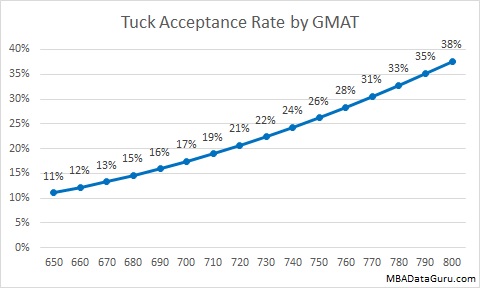 GMAT score has a large influence on Tuck acceptance rate. The average Tuck GMAT score is fairly high at 716. Adding a hundred points to your GMAT more than doubles your chance of admission. Even with a low GMAT of 650, acceptance rate at Dartmouth is still more than 10%, unlike Harvard where you need a 740 to have a 10% chance of admission.
Tuck Acceptance Rate by GPA
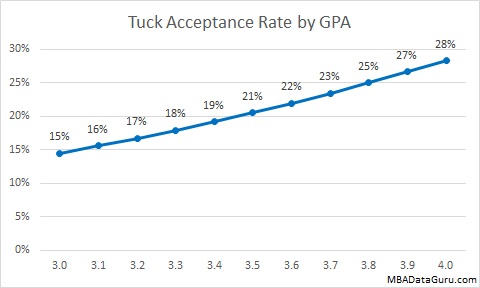 The average Tuck GPA is a solid 3.5. It is clear that applicants with a higher GPA have a better chance of being accepted. Once graduated, GPA is set in stone, so you might as well focus on increasing your GMAT which can still be increased.
Tuck GMAT vs. GPA
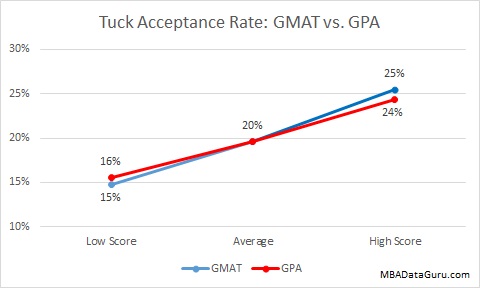 Next we look at whether Tuck prefers a high GMAT or a high GPA. The graph above shows that applicants with a high GMAT have a slightly better chance of being admitted than an applicant with a high GPA. The difference is so small that it is not very important.
Tuck Acceptance Rate by Application Round
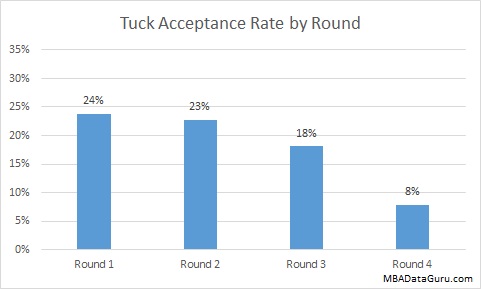 As you can see in the graph above, the round you apply to Tuck does influence acceptance rate significantly. Round 1 and 2 have a similar admission rates of around 24%. Round 3 acceptance rate starts to drop off noticeably to 18% but not much below the 20% average acceptance rate. The Tuck acceptance rate for round 4 is extremely low, at 8%. Unless you have an incredible application or are desperate to leave your current job for business school, I recommend avoiding round 4 and waiting for the next year.
Tuck Acceptance Rate by Years of Work Experience
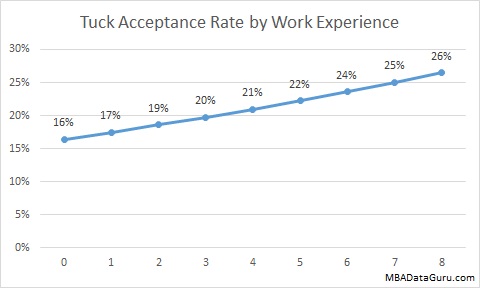 Tuck values applicants that have a longer work experience. Each year of work experience raises your chance of admission by a little more than 1%.
Tuck Acceptance Rate by Age
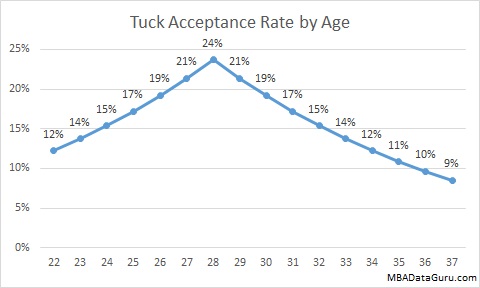 Similar to other schools such as Columbia, Duke, Cornell and Booth, Tuck prefers applicants who are around 28 years old. I believe that this is because they have enough work experience to draw on during school but are not too old to be placed at companies during recruiting. In the above graphs I look at age and years of work experience separately, however in reality they are closely related.
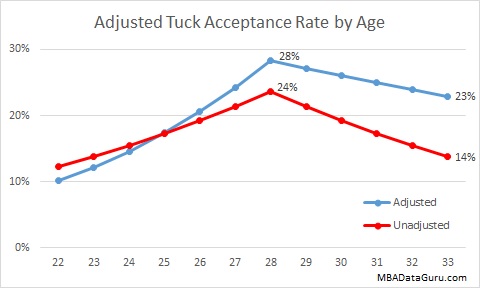 In the graph above I adjusted the original acceptance rate by age graph and added in the impact of work experience. For simplicity I assume that everyone graduates at 22 and works full time from graduation until they apply for business school. When these two factors are combined, you see that older applicants have a large advantage compared to younger applicants.
Other Tuck Admissions Factors
There are a few other factors that affect your chance of admission to Tuck. International applicants (excluding India) have a significantly higher chance of admission, at 28% acceptance rate. Applicants that worked in Venture Capital are especially prized at Tuck, with an impressive 47% chance of admission.
If you are thinking of applying to Tuck, be sure to check out my Tuck Interview Question Guide so you know what questions to expect. The data for this analysis came from GMAT Club.