This article will analyze the model I built to predict INSEAD acceptance rate. INSEAD is a graduate business school in France, near Paris. It has two additional campuses in Singapore and Abu Dhabi. In addition to the MBA program, INSEAD also has an Executive MBA, Masters in Finance and a PHD in Management. Unlike most business schools in the US, INSEAD’s full-time program only offers a 1-year MBA. INSEAD students can either start in September or January. The January start is a 12-month program for students who would like to do an internship. The September start is a 10-month program. INSEAD prides itself on being a global business school, thus, it requires applicants to speak two languages fluently before being admitted. In order for a student to graduate, they must speak three languages. On average, INSEAD MBA acceptance rate is 31%. The average GMAT is 703 and the average GPA is 3.5.
INSEAD Acceptance Rate by Starting Semester
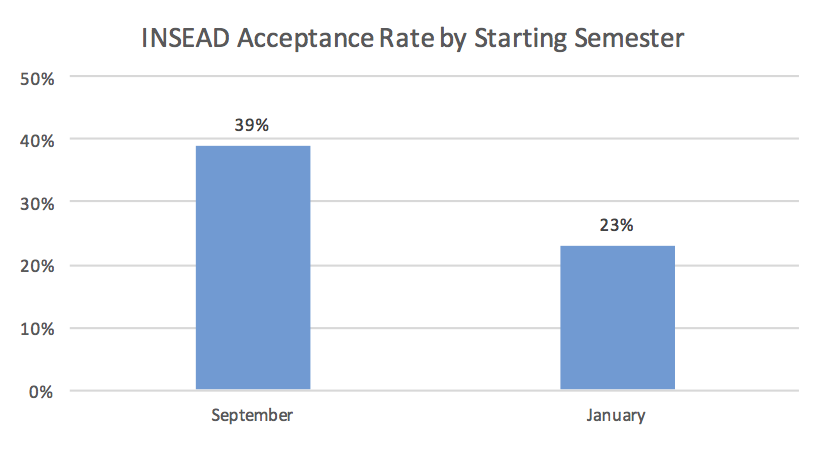 Similar to Columbia, INSEAD has two start options. Since many MBAs are hoping to use their MBA to transition into a new industry, there is much more competition for the January start because it allows for an internship during the summer. Since fewer people apply for the September starting semester, their chance of admission is 70% higher than that of the January applicants. September INSEAD applicants have a 39% acceptance rate compared to only 23% for January applicants.
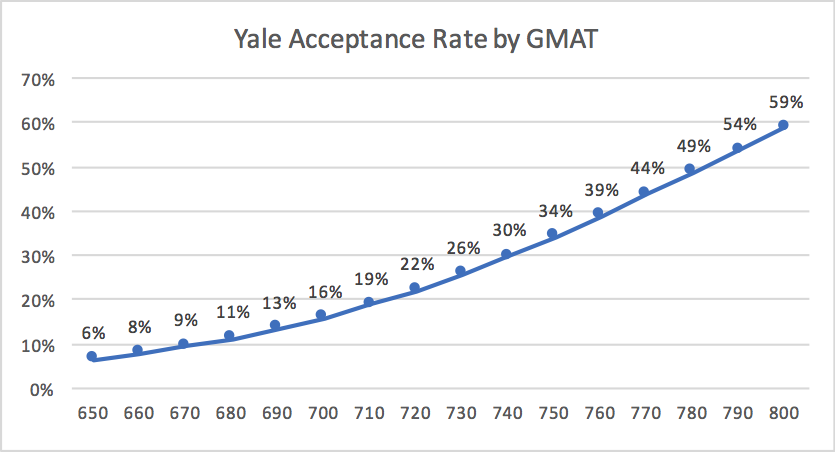
INSEAD Acceptance Rate by GMAT
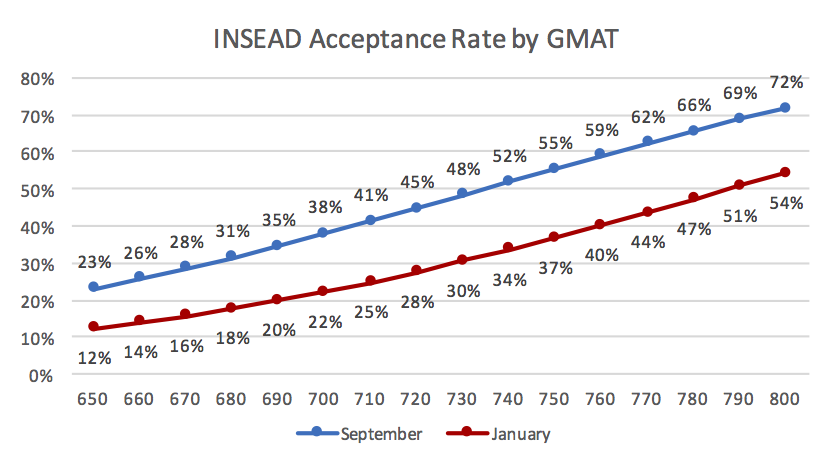
GMAT has a large impact on an applicant’s chance of admission at INSEAD. It is especially important for those applying for January. A 100-point increase from 650 to 750 would raise January acceptance rate from 12% to 37%, which is a 208% increase in chance of admission. A similar increase in GMAT for a September applicant would only increase chance of admission by 140%.
INSEAD Acceptance Rate by GPA
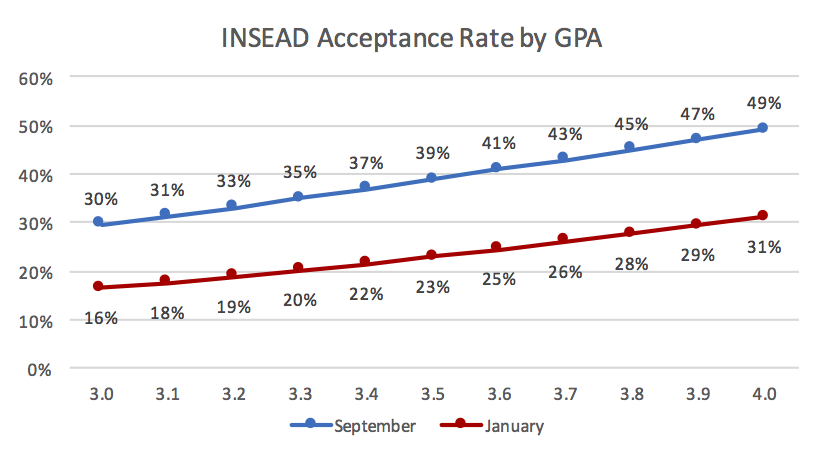 A high GPA can increase your odds of getting into INSEAD. Both start semesters get a healthy boost in chance of admission from a high GPA. Interestingly, a January applicant with a 4.0 has a similar acceptance rate, at 30%, as a September applicant with a 3.0.
INSEAD Acceptance Rate: GMAT vs. GPA
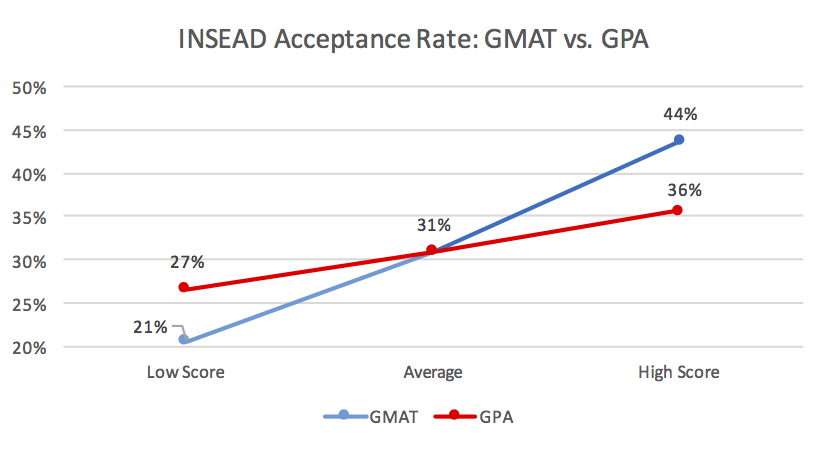 Although both GMAT and GPA are both important for admission into INSEAD, GMAT is more important. Getting a high GPA (one standard deviation above average) will increase chance of admission 5%. However, a high GMAT will increase your chance of admission by 13%.
INSEAD Acceptance Rate by Geography
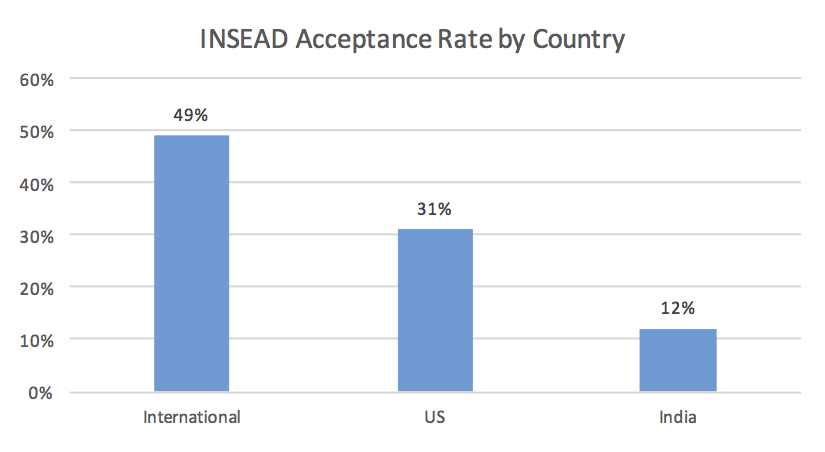 Citizenship has a significant impact on INSEAD acceptance rate. Indian applicants face tough competition for a spot as an MBA student at INSEAD. Indian applicants have an acceptance rate of only 12%. Admission to INSEAD is much easier for Americans, with an average acceptance rate of 31%. No other country had enough applicants to be statistically significant, so I grouped all other countries into the category of “International”, which had an acceptance rate of 49%.
The data I used to create the INSEAD model came from GMAT Club.